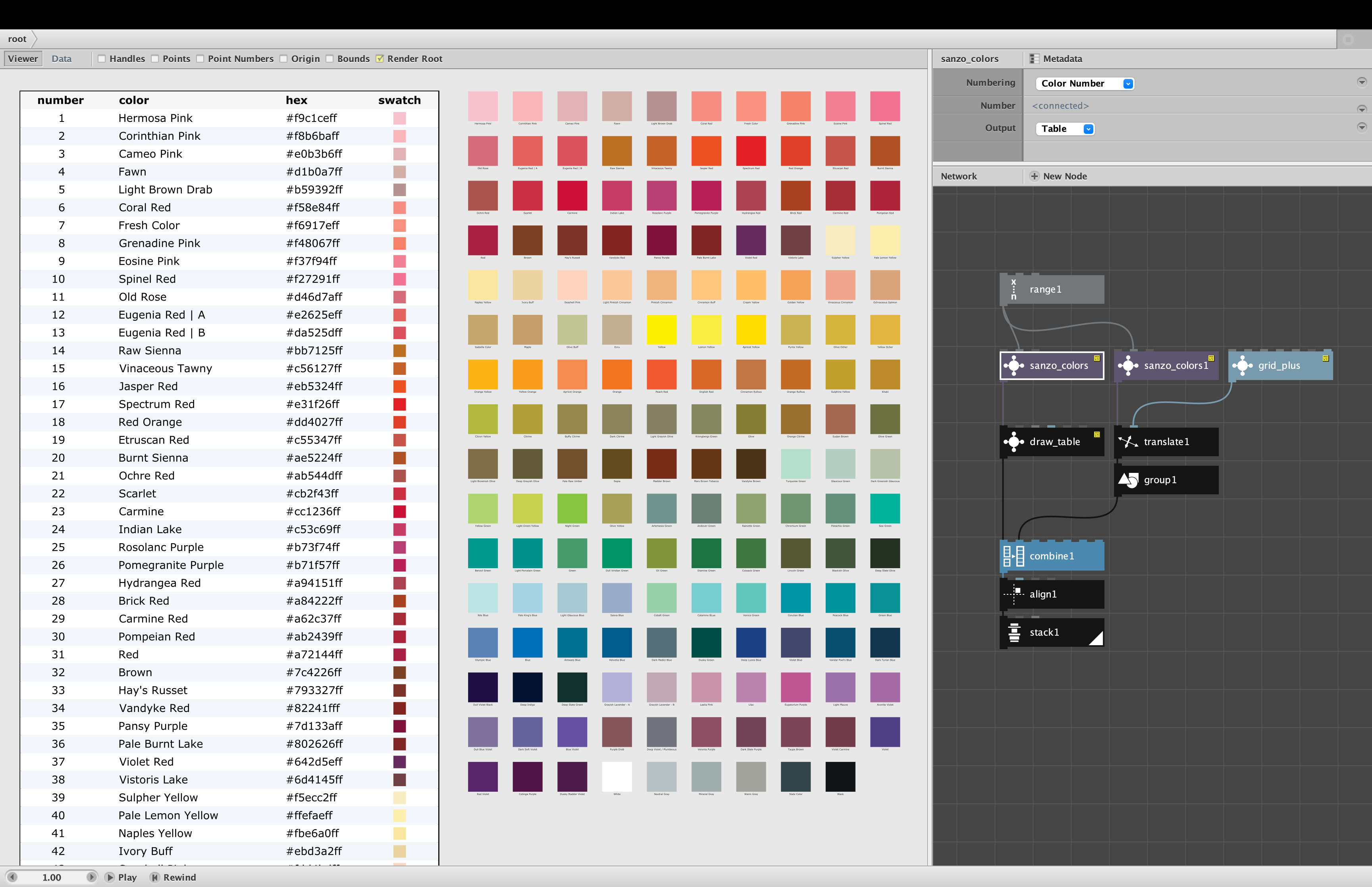
UPDATE: see below in thread. I added new numbering and output options.
Last weekend I picked up a charming little book called "A Dictionary of Color Combinations" published in Japan in 1932 by a pioneering color expert of his day, Sanzo Wada. I was so delighted by this book that I turned it into a node.
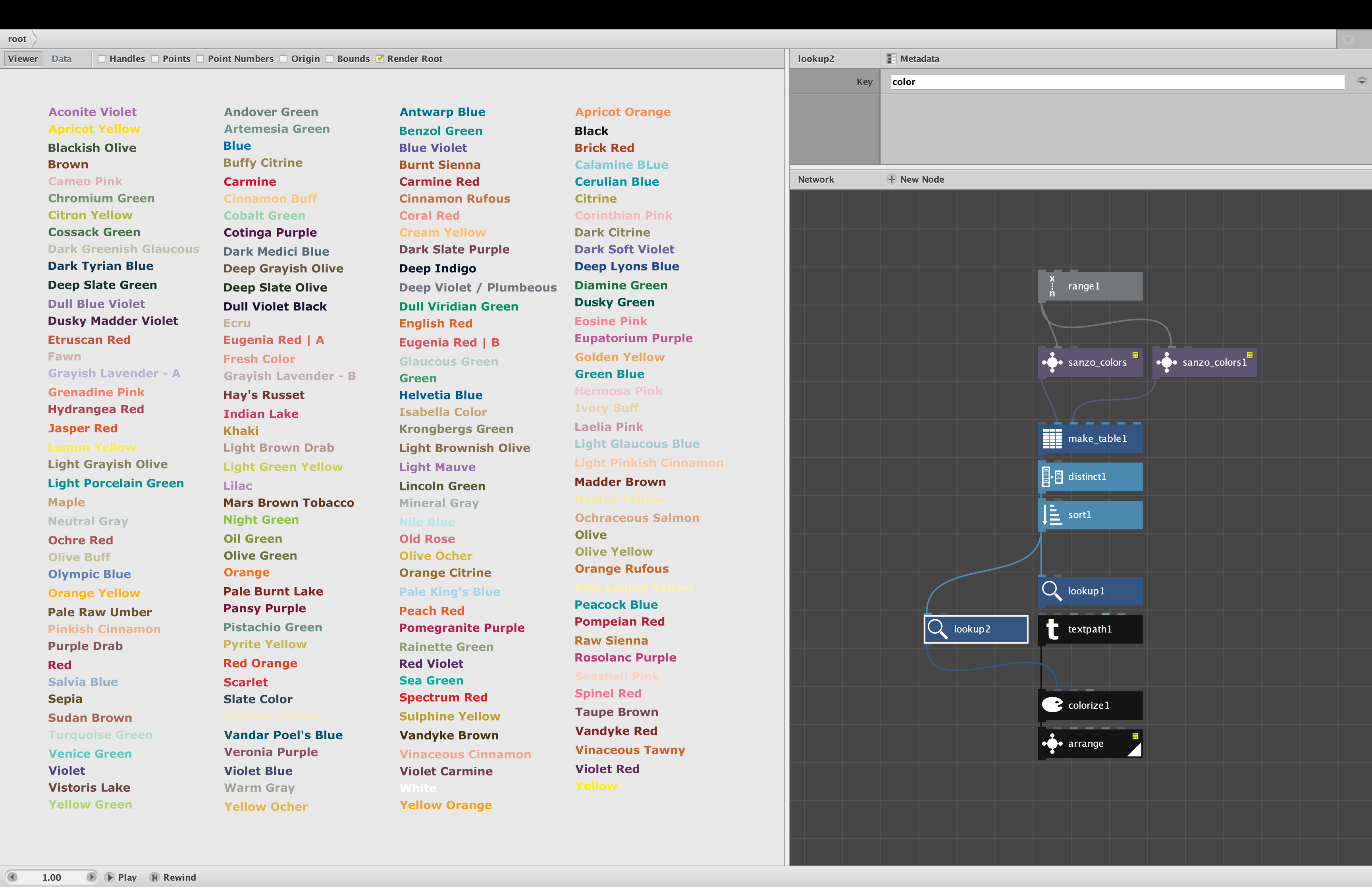
The book consists of 348 carefully chosen color combinations: 120 duos, another 120 trios, and 108 quartets, all formed from a stable of 159 colors, each with an evocative name. It's very simple, but there is something magical about it.
You can find our more about it here: https://sanzo-wada.dmbk.io
And here: https://jinenstore.com/products/seigensha-a-dictionary-of-color-combinations
The first of these links includes a GitHub with all the color data listed in a JSON file. Unfortunately, after much work, I discovered many errors and omissions in that data. Searching further, I found a cleaner data source here: https://www.wada-sanzo-colors.com/about
The data is open source under the following license: https://github.com/mattdesl/dictionary-of-colour-combinations/blob/master/LICENSE.md
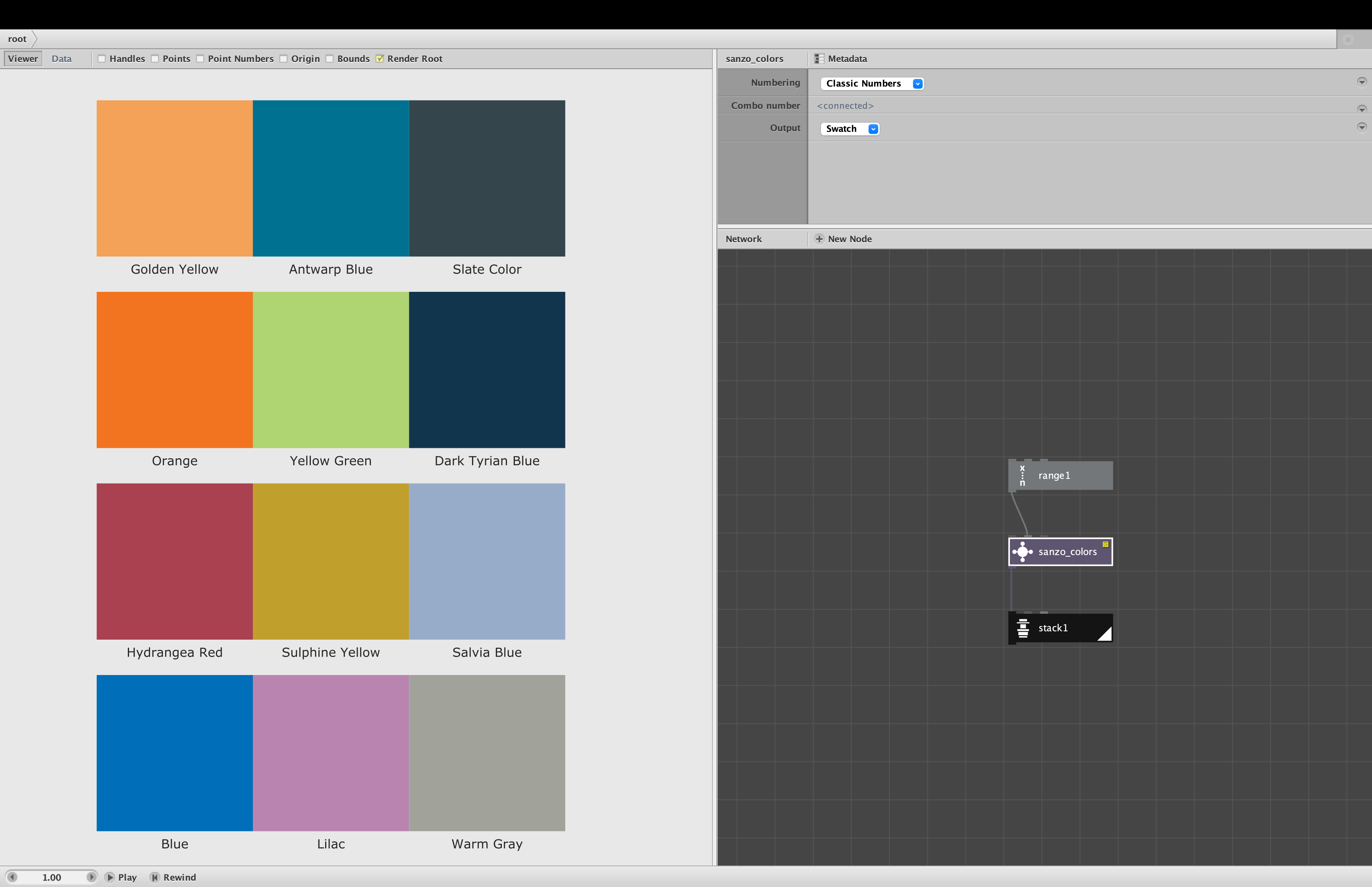
It took some doing, but I was able to turn all of this into a simple, freestanding Nodebox node. Demo and screenshot attached.
To summon a particular color combination from the book, all you have to do is enter its number. There are four ways of doing this:
- Classic Numbers. A number from 1 to 348 from the book.
- Duos. A number from 1 to 120 to select a two colors.
- Trios. A number from 1 to 120 to select three colors.
- Quartets. A number from 1 to 108 to select four colors.
The first method is handy if you want to step through all 348 combos, or have the book and want to call up a combo from that. The other three methods are useful if you know how many colors you need (2, 3 or 4) and want to restrict your list to those. You can enter combo numbers one a time or hook up a range node to create a chart.
You then have two choices of output:
- Swatch. Output a swatch of the colors with the color names below each color.
- Colors. Output a list of 2, 3, or 4 colors, which you can then feed into other nodes.
That's it! I hope you find this node as delightful as I do. I will be adding it to the color section of my library soon.